I wandered out behind the house this week, braving the thick bog-dwelling mosquitoes to photograph the native flora. The
pink ladyslipper orchids [pictured] (Cypripedium acaule) are just past their prime but appear to be thriving. No doubt the blood-sucking bugs reduce the amount of foot-traffic parading over their bed of reindeer lichen.

The wild shrubs such as low-bush blueberry,
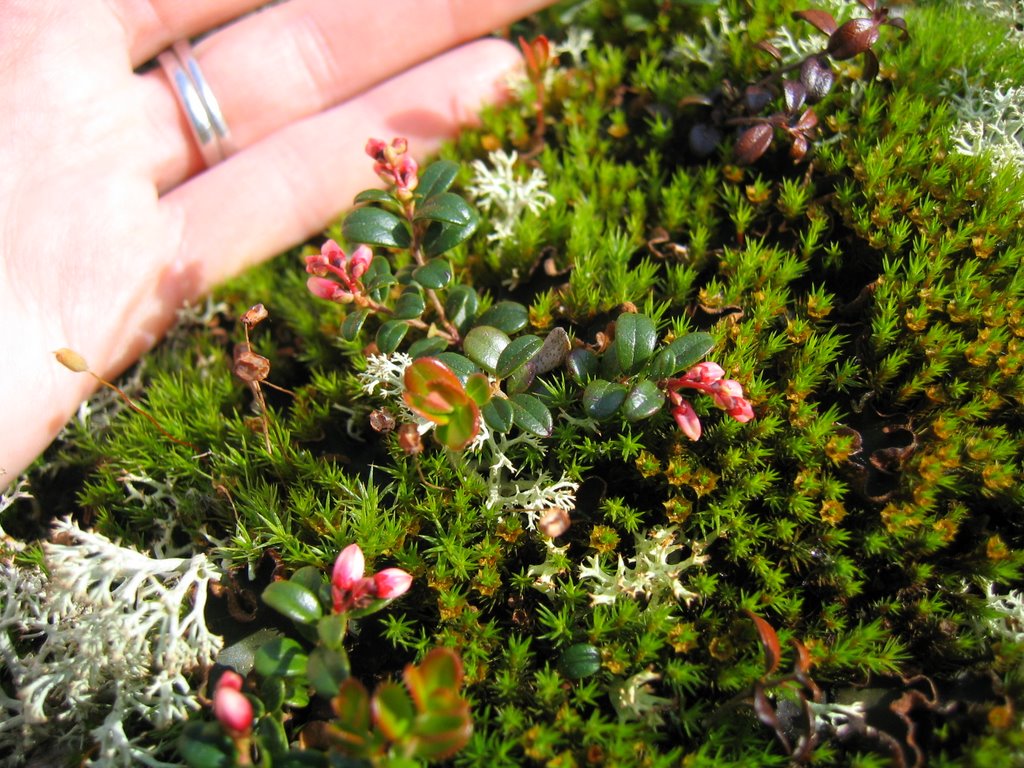
low-bush cranberry [pictured] (lingonberry, Vaccinium vitis idaea), bunchberry (Cornus canadensis), and Labrador tea are flowering now.
I have planted a Bailey's compact highbush cranberry in the yard (no flowers this year) and there are wild raspberries, pincherries, and Saskatoon berries already growing in the yard. I haven't the patience to pick pincherries, but I do appreciate the pincherry jelly that is made around here. The local berries make for delicious waffle-toppings!
I also have been searching Blogger for other gardening blogs, but haven't yet found many companions into true cold-weather northern gardening (you folks in northern California think you have it rough, but you're zone 5a for goodness sake!). Let me know if you find a real do-it-yourself adventurous gardeners with a photoblog.

 Posts
Posts


 I don't know what this was and my close-up photos were not in focus. It reminds me of a Pulmonaria (lungwort) with its blue flowers. Like Pulmonaria, the unopened buds are pink.
  The pink corydalis (Corydalis sempervirens), growing in the open on a rock face.
  Labrador tea shrubs (Ledum groenlandicum) carpet vast areas of the rocky terrain. This plant is one of the first to recolonize burned bog areas, which is consistent with its abundance here. Along with Labrador tea, there were thousands of blueberry, lingonberry (aka cranberry), bearberry, and bunchberry plants in bloom.
  Of course, there were plenty of pink lady's slippers. These ones were at the trailhead, just outside the Nut Point Campground. These are almost always found in rocky areas, among moss and under dappled shade of spruce trees. Of course, never never dig these flowers up! They are rare and protected and besides, are in a provincial park!
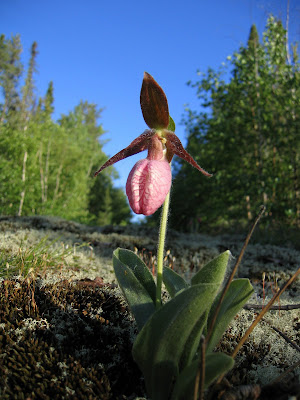


 Shockingly, we also have lady's slipper orchids growing wild in our back yard! The local pink lady's slipper orchids are of the related genus