 |
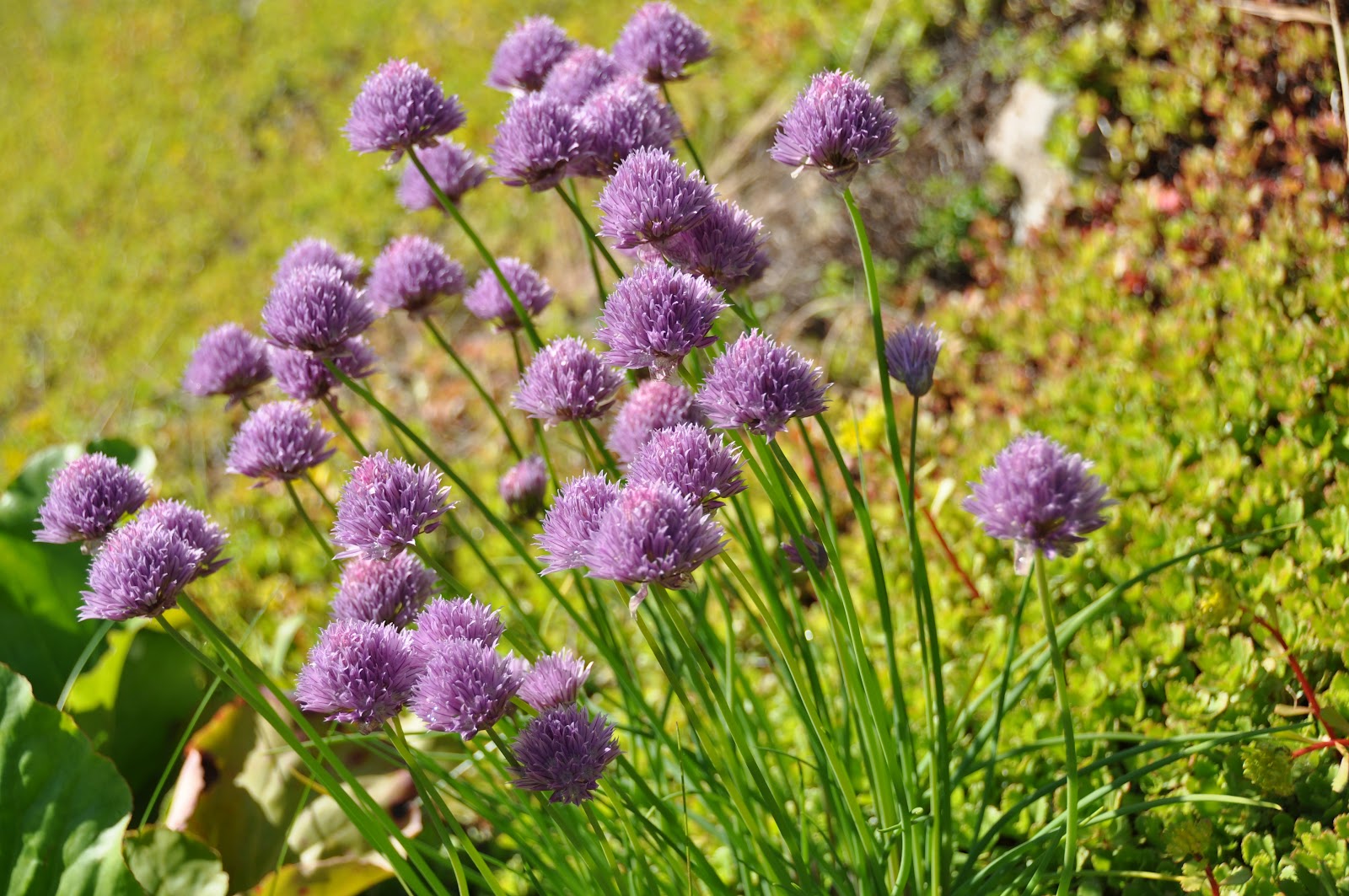
| Regular Chives, Allium schoenoprasum |
This week in the garden is notable for the unique show put on by a
members of the onion family. There are several bunches of chives
growing in the yard, though all of them exist outside the official
vegetable patch. They seem to occur in the lawn, flowerbed, among
groundcover, and between shrubs. I'm fine with that. I deadhead
mine to prevent further spread and extra plants are given away to those
not yet blessed with an abundance of this hardy perennial. In case you
weren't aware, do NOT pick and eat the flowering stems. They are tough and twig-like in consistency.
In case you had ever thought about growing onion relatives for purely ornamental value (I'm sure this would greatly confuse my Mennonite ancestors), there are several varieties that are quite attention-grabbing and deserve to be planted in more gardens. Our northern garden is limited to only a few types. I tried some of the smaller ones (e.g.
Allium moly luteum), but they got lost among all the larger perennials.
 |
| Allium "Purple Sensation" blooming June 21, 2012 |
Allium aflatunense/hollandicum "Purple Sensation" is a variety that has grown well here for a few years. The occasional super-awful winter will kill them, but generally, these are okay here. I get mine by mail order from
Botanus. I'd like to be able to grow "Globemaster" or
Allium giganteum, and did try once, but their zone 6-9 hardiness rating just didn't suit our climate. Their ball-shaped flower heads are very large and I've admired them in German and Pacific northwest gardens. "Purple sensation" is rated for zone 4-9, as is the white-flowered Allium "Mount Everest" and the smaller-flowered A. atropurpureum, and A. azureum.
Bees and butterflies are attracted to Alliums, but rodents and deer are said to be repelled. However, we haven't really had any deer or rodent problems here, so I can't attest to that quality.
The key to growing any of these ornamental alliums is to have some plants in front of them that will grow to hide the dying foliage. The foliage is already dying as the plant gets into full bloom. I have planted some annuals in front of mine.
 |
| Allium "Purple Sensation" flower head |
 |
| Allium "Purple Sensation" and some fine weather |
I think I really must plant a few more of these this fall. They're a cool architectural element in the garden.

 Posts
Posts